
From Ideas to Inventions: Knoxville Students Take on the Maker Design Challenge
By Melissa Carey, MakerUSA Program Manager
“Can we laser engrave an orange?”
The question came at the very end—somewhere between curiosity, humor, and genuine wonder—while students gathered around an XTool laser engraver during the closing moments of the Maker Design Challenge at Pellissippi State Community College’s Magnolia Avenue Campus.
There were snacks on the table throughout the week. Oranges included. That small detail mattered more than it seemed.
By the end of the workshop, that orange had become more than fruit. It had become a symbol of what happens when students are given time, tools, and permission to explore ideas freely. A few hours earlier, that question would not have existed. But after three days of guided creativity, ideation, and hands-on building, curiosity had expanded into something bigger—an instinct to wonder, test, and imagine what else might be possible.
From June 8–10, seven middle school students from across the Knoxville area came together for a hands-on experience made possible through a partnership between Maker USA and Pellissippi State Community College, with support from the Arconic Foundation.
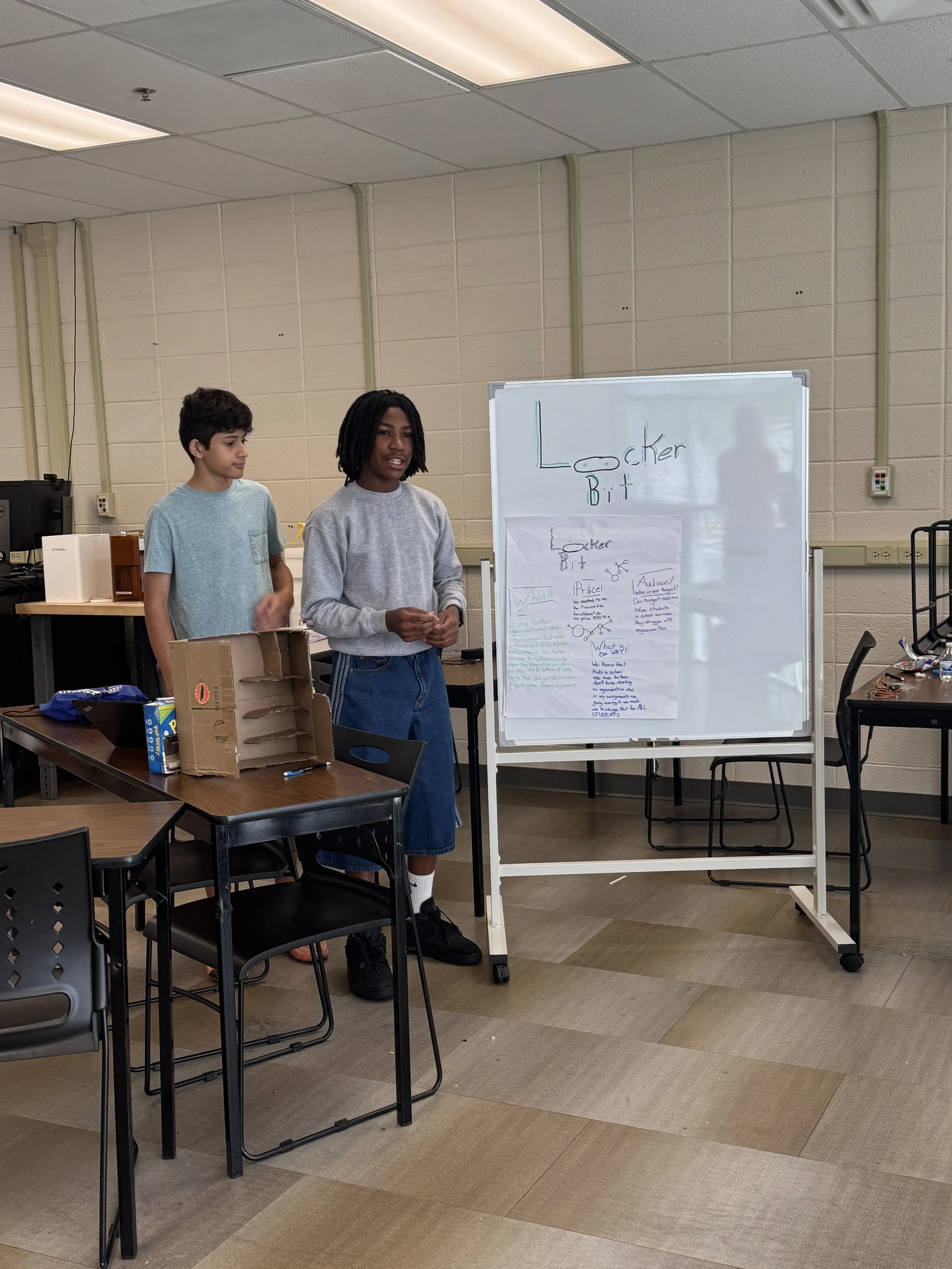
Students share their prototype for the Locker Bit, a smart locker organizer.
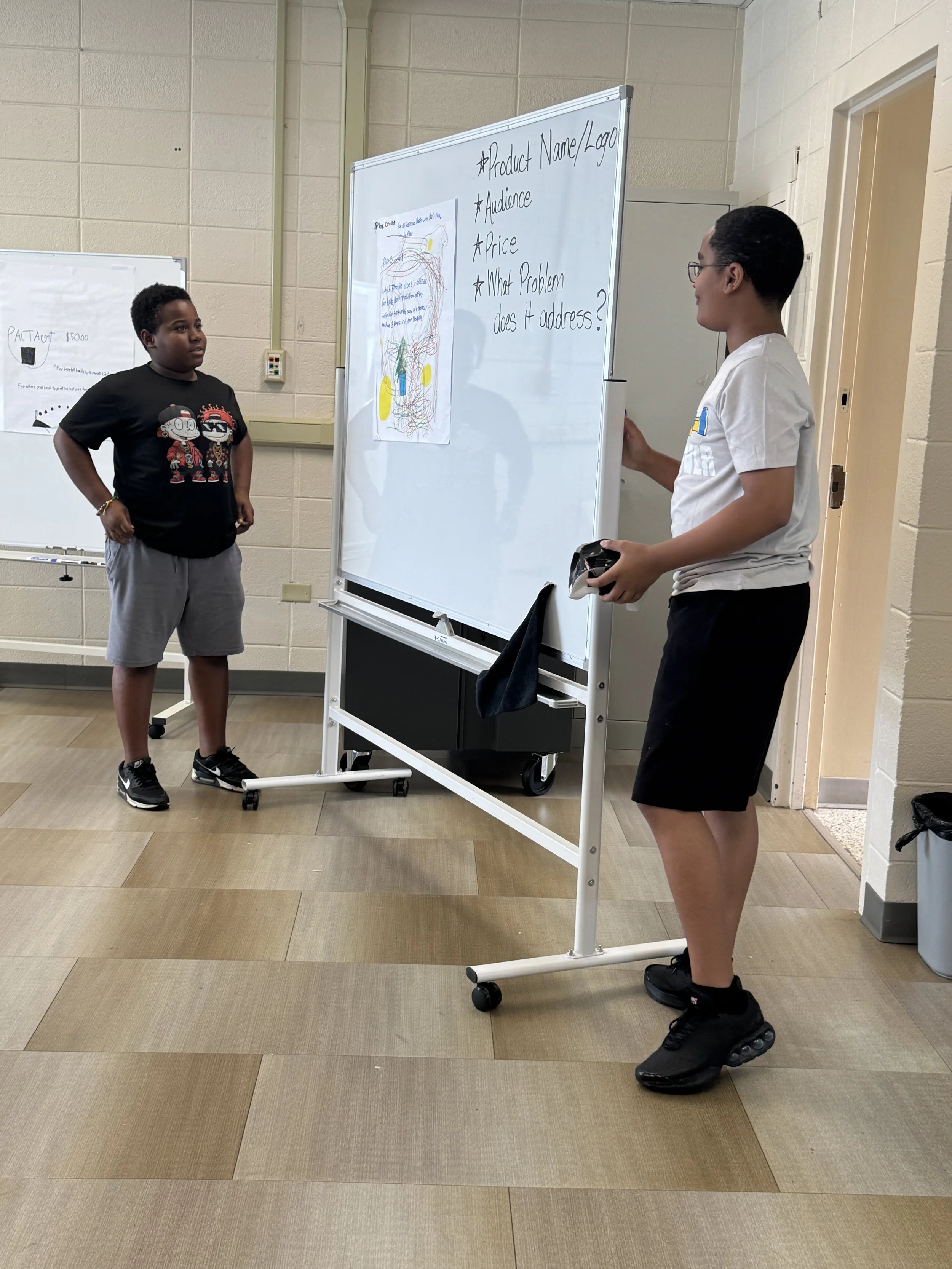
Students proudly showcase their hard work to their caregivers at the showcase.
The students represented homeschool, public school, and private school communities. Different backgrounds and experiences—but in the maker space, curiosity and persistence quickly became the common language.
The work began not with building, but with noticing.
What problems do you see in your school, community, hobbies, or everyday life?
The room shifted into a searching quiet.
Some students struggled to identify a real problem. Others quickly landed on ideas that already existed and were encouraged to go deeper—beyond what is, toward what should be. For many, it was the first time they had been asked not just to solve a problem, but to identify one worth solving.
The infamous TV show, Shark Tank came up more than once—half joke, half inspiration. What makes an idea strong enough to stand on its own? (and worth an investment?)
That question lingered as the work began.
Cardboard, cardstock, duct tape, recycled materials, Microbits, and servo motors soon filled the tables. Sketches became frames. Frames became prototypes. The room shifted into a rhythm of testing, failing, adjusting, and trying again.
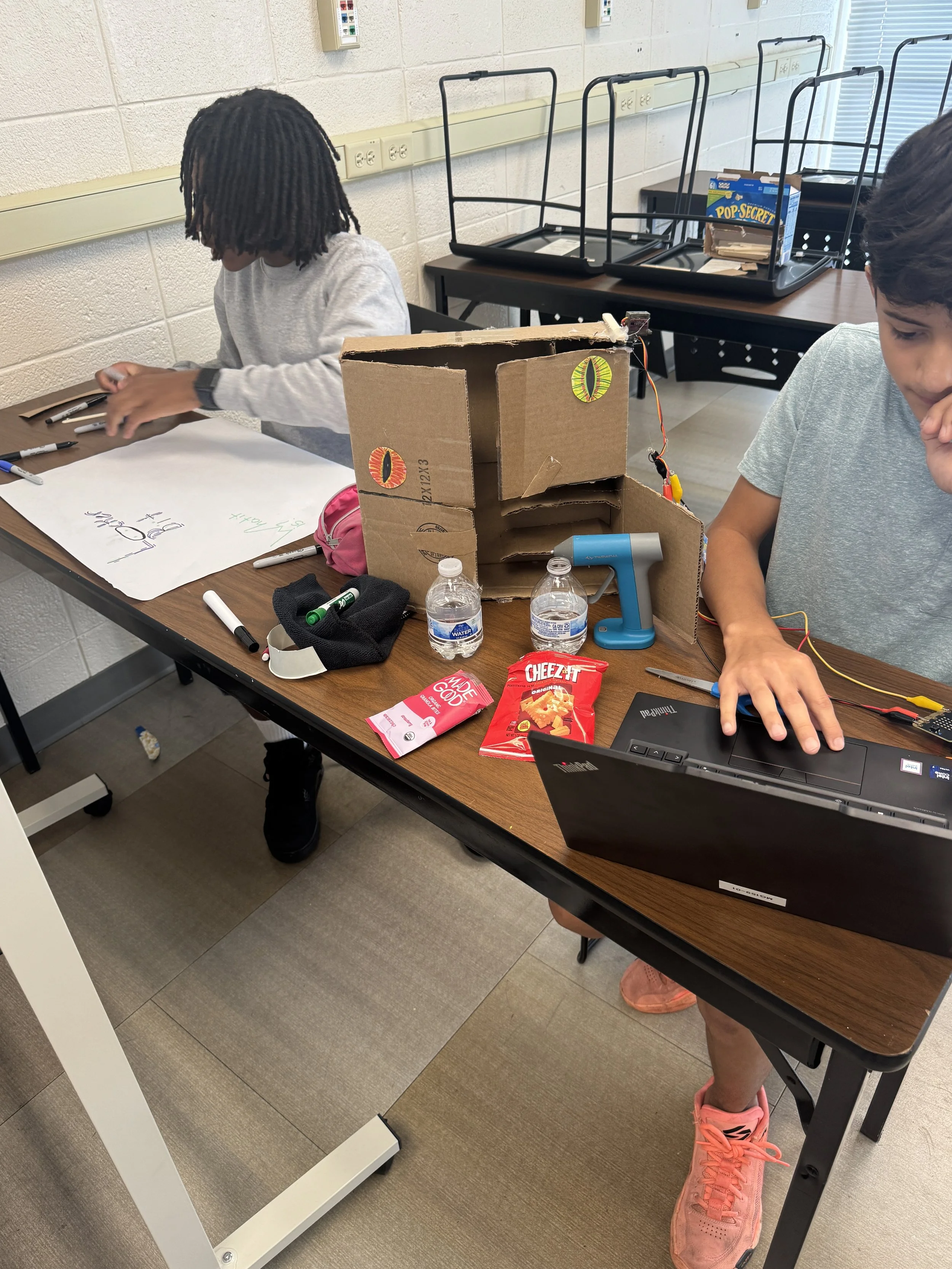
Students working on their solution.
Then came one of the most important shifts of the week.
Near the midpoint of the build phase, several students believed they had successfully finished in record time. Then came peer critique.
Questions. Feedback. A closer look.
And suddenly—unfinished.
What followed was redesign, rethinking, rebuilding. Iteration stopped being a concept and became practice. Back to the drawing board, more duct tape, fix the code. It was one of the most honest and productive moments of the workshop.
And then, within the improvement phase of our time together, the small but mighty declarations started.
“I did it!”
“Wait—it works!”
“Finally, I got it to work!”
Smiles gave everything away. You could see it in the moment a design clicked, when a motor responded correctly, or when a line of code finally produced the intended motion or sound.
Even Microbits became tools of discovery. Students began experimenting intuitively—triggering motion, generating sound, and layering interactivity into their designs in ways that often surprised even them. What began as unfamiliar technology quickly became something they wanted to keep exploring.
By the end of three days, students had created projects rooted in their own interests: locker organization systems, baseball practice tools, and a motion-detection video game controller. Each began with a problem and became an attempt at a real solution.
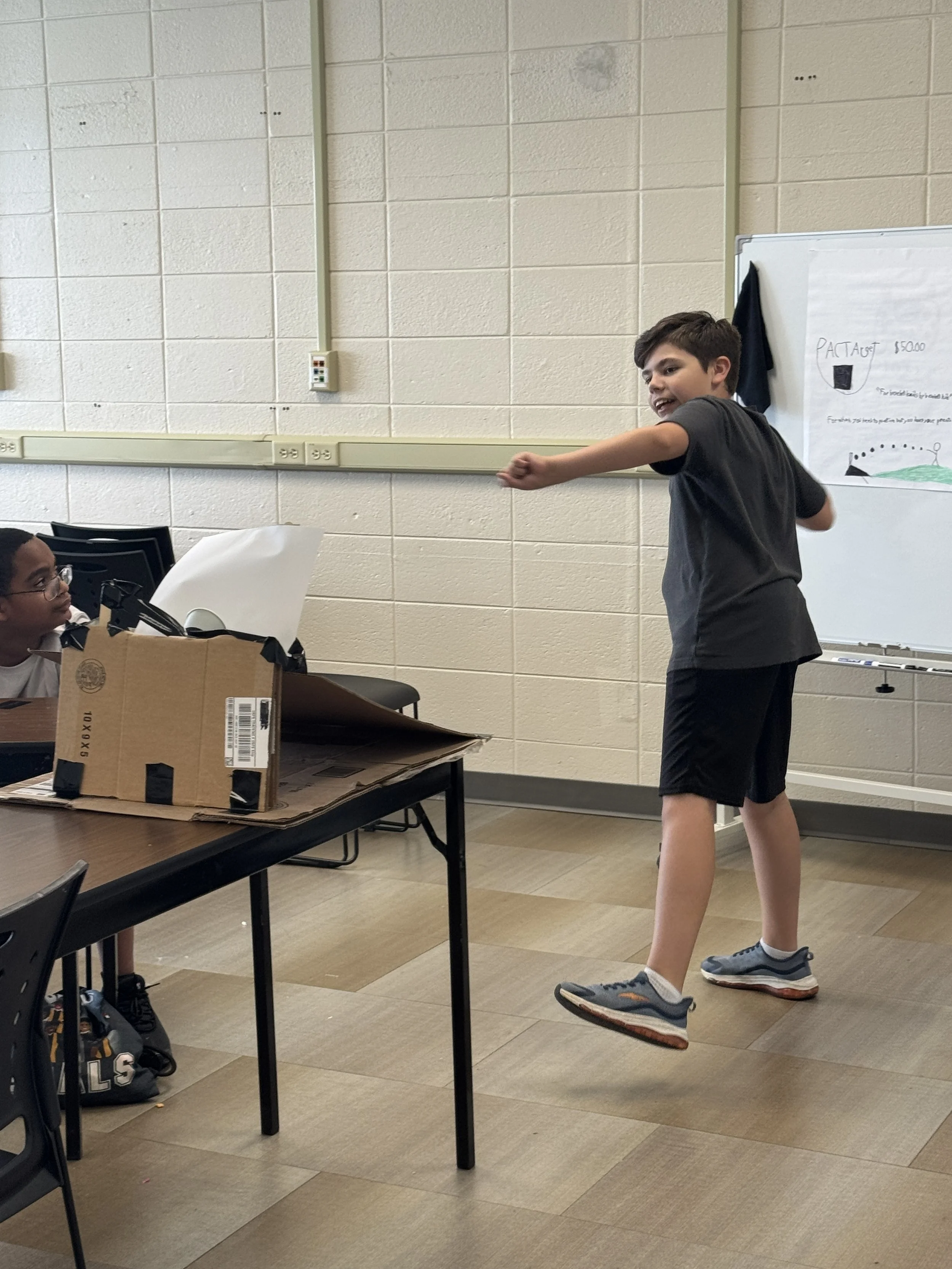
Student demonstrates the 'PracTarget' - a throwing and returning baseball device for independent practice.
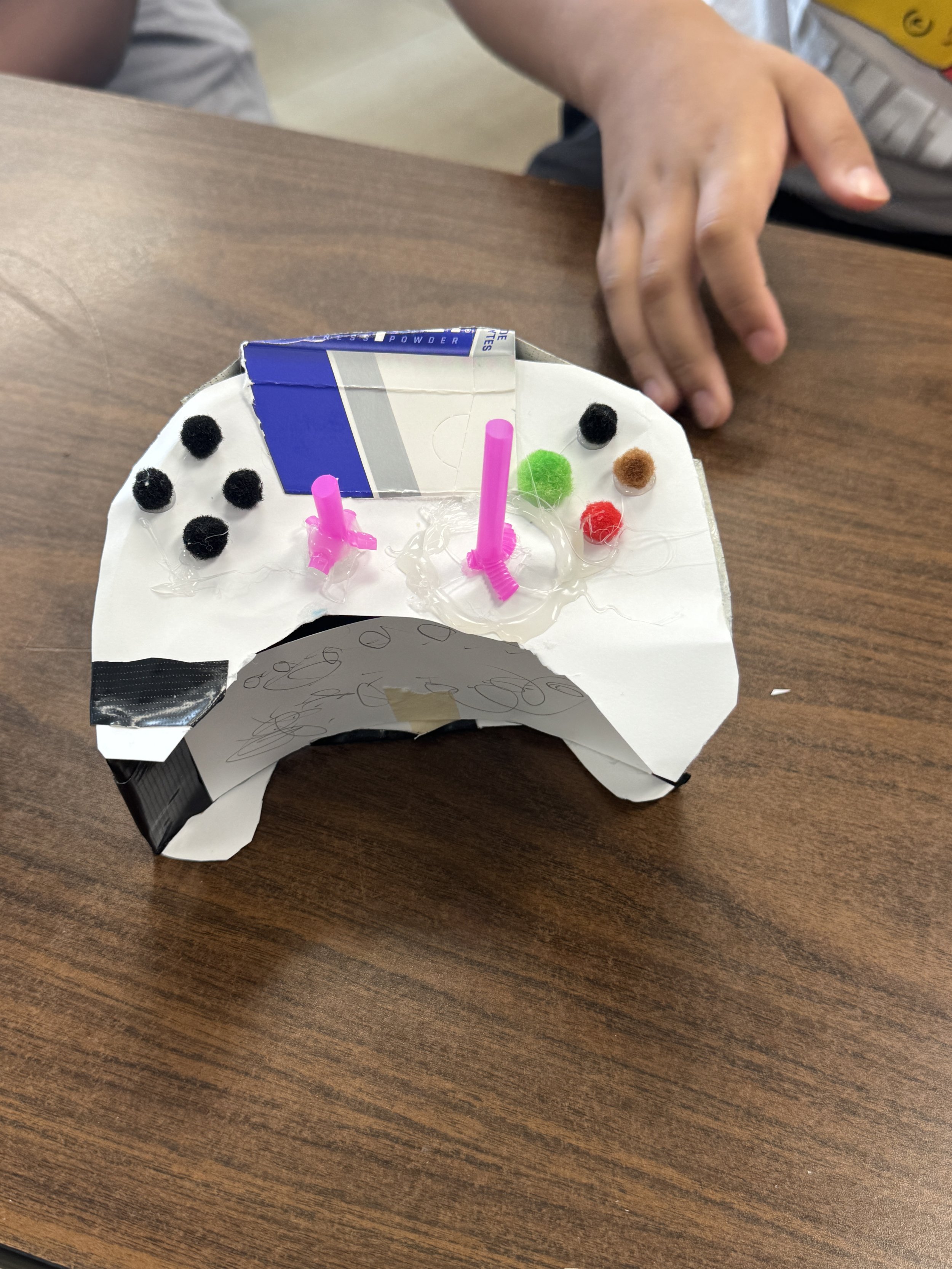
Prototype for the universal video game controller, powered by a micro:bit.
On the final day, families joined for a showcase.
Students presented their inventions—sharing product names, intended audiences, price points, and the problems they were solving. Some spoke quietly at first, then grew more confident as they explained their work. Caregivers leaned in, asked questions, and explored the prototypes alongside them.
Students weren’t just presenting anymore—they were owning their work.
To close the experience, students used an XTool laser engraver to create keepsakes to take home. Caregivers joined in, engraving personalized items and learning a little themselves.
Several students were asking if they could take their Microbits home so they could continue building. What started as something new had become something they didn’t want to stop using.
By this point, something had clearly shifted in the room. The work was no longer just about completing projects—it was about thinking differently.
That’s when, almost casually but completely in the spirit of the week, a student looked at the remaining snacks on the table and then the XTool and asked:
“Can we laser engrave an orange?”
It got a chuckle from me - and a ‘why not?’ But it wasn’t just a joke.
It was what happens when curiosity is stretched instead of shut down—when students are given permission to wonder beyond instructions.
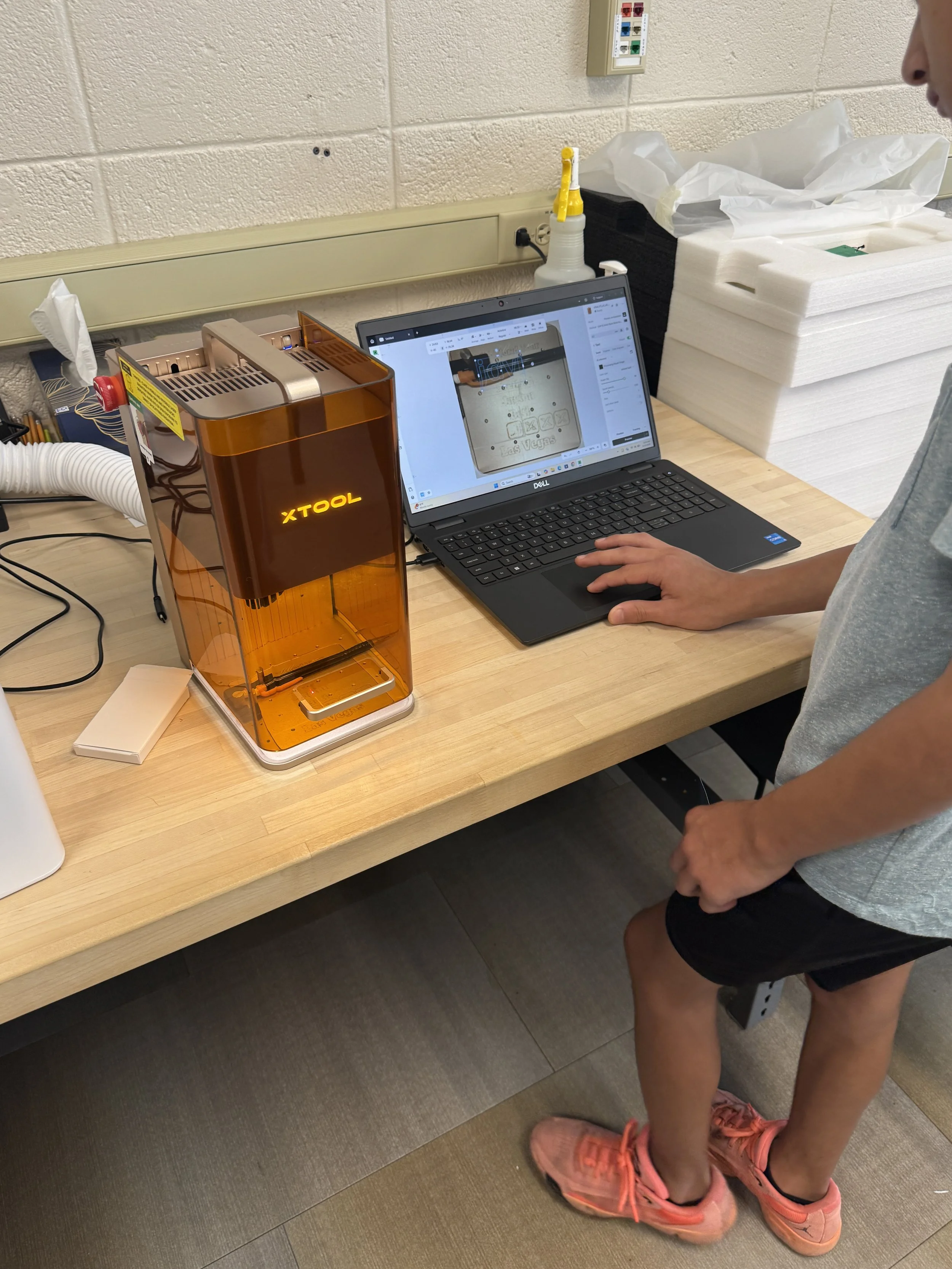
Learning about digital fabrication.
A few days earlier, that question wouldn’t have existed. By the end of the workshop, it did.
And that was the point.
Not the orange itself—but everything it represented: possibility, exploration, and the beginning of thinking like an inventor.
Summer Maker Design Challenge Video. Courtesy of Macy Long.
