
Permission to Unlearn
by Melissa Carey, MakerUSA Program Manager
I’ve been in this role for a little over three years now, and I’m still figuring out what “Program Manager” actually means day to day. That is to say, I wear a lot of hats. Recently, I was facilitating a workshop for educators—and boy, was this a full-circle moment for me.
After years of dreaming and months of planning, I sat down to put the finishing touches on the June 2026 launch of the Innovative Makers Academy—a dynamic collaboration created by educators, for educators.
Having participated in more professional development workshops than I can count over the course of my career, I had a few goals. This needed to be fun, interactive, engaging, and worthwhile. I wanted every educator who walked through the door to leave feeling refreshed, encouraged, and empowered.
As I thought about how to open those two days and set that tone, one idea kept rising to the surface:
Maybe it’s just as important to unlearn some old things as it is to learn new ones.
Learn? Sure.
Of course I wanted learning to happen—by experiencing new things, getting their hands on tools and technologies, and kicking around ideas with other educators. Not by sitting through another slideshow presentation, listening to the latest educational buzzwords and initiatives that would likely get buried under the realities of a new school year.
Unlearn? Interesting.
This is something I have done quite a bit of my own over the past few years—when I stepped out of the fifth-grade classroom I had been in for eight years and into my role with MakerUSA. I realized I had started to hold some ideas about teaching a little too tightly.
Maker-centered learning challenged that. It didn’t just add to my practice—it asked me to let go of parts of it. It invited me into a more open way of thinking, one where not knowing wasn’t a weakness, but a starting point.
It helped me replace what I thought teachers should say:
“I know.”
With:
“I don’t know… let’s find out together.”
That seemingly simple shift stayed with me. It reshaped how I thought about learning spaces, and it inspired me to create experiences where other educators could step into that same kind of unlearning. It became the foundation for this summer’s Innovative Makers Academy.
So when the first cohort arrived early on Tuesday morning, we opened with a maker design challenge: create a “waiting space” they would reimagine. The prompt was simple—design a space where waiting could become more pleasant. They had about 30 minutes to build, using simple materials like cardstock, tape, yarn, and everyday school supplies, and they were told they did not have to finish.
What followed was focused and intentional work. Each educator chose to work quietly and independently, giving the task their full attention as they moved toward developing their vision.
Ideas surfaced quickly: a coffee shop-style space before entering the car rider line, a shaded parent bench with tables and misting stations near a playground, a “portal system” for kindergarten pickup so students could clearly hear and move to the right place when their parents arrived, and even a redesigned space outside the principal’s office—not as a place of punishment or anxiety, but as a “space to grow,” surrounded by color and flowers.
As I announced the approaching time limit, there were audible groans and a noticeable shift in energy—urgency, quick adjustments, and the familiar pressure that often comes when we are used to completing tasks within a set window.
All of this came from a single prompt with very little instruction. No pressure, no rules.
I offered a reminder that being ‘done’ was not the goal and noticed some of the tension fall away.
And maybe that was one of the first quiet moments of unlearning: realizing that meaningful making doesn’t always require more direction and a finish line—sometimes it requires space, trust, and permission to approach the work differently.
After the design challenge, we took a tour of the Able Trade makerspace and then spent a little time naming the differences between traditional learning, project-based learning, and maker-centered learning—not as hierarchy, but as a way of noticing how each creates different conditions for student thinking, making, and engagement.
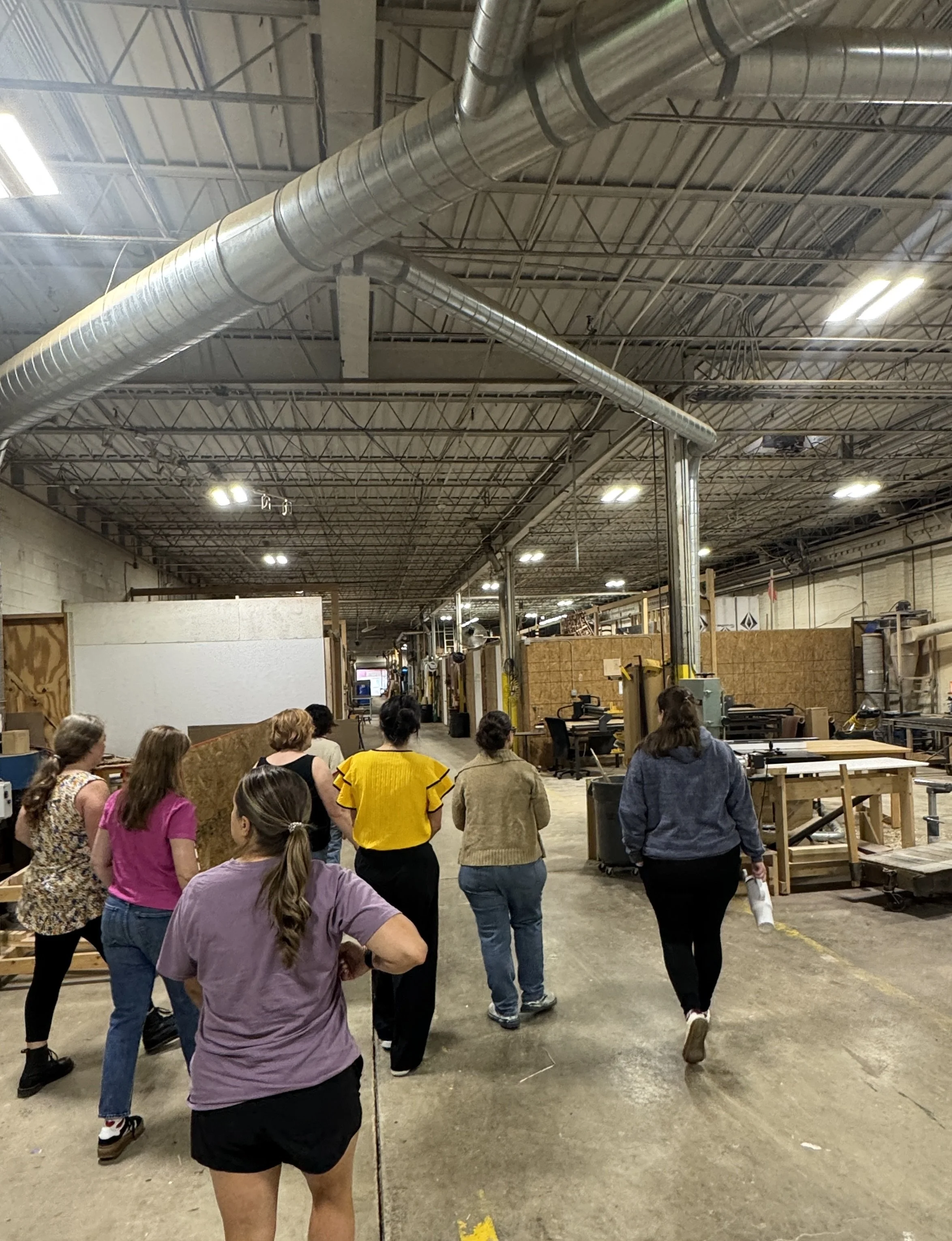
Melody Ratliff, co-owner of Able Trade, hosts educators on a tour of the space.
Over the two days, we were fortunate to be joined by fabulous guest educators who generously shared their time and expertise. Tuesday - Kristin Burrus from Hamilton County Schools in Chattanooga spoke about her work as Lead Teacher at the Global Center for Digital Innovation, offering a grounded view of what maker-centered learning looks like inside public education. Wednesday - Joel Smith, veteran CTE educator and founder of TeachCraft, invited us to think more broadly about emerging technologies, including AI, not as add-ons to instruction, but as tools that can reshape how we design creative, project-based learning experiences.
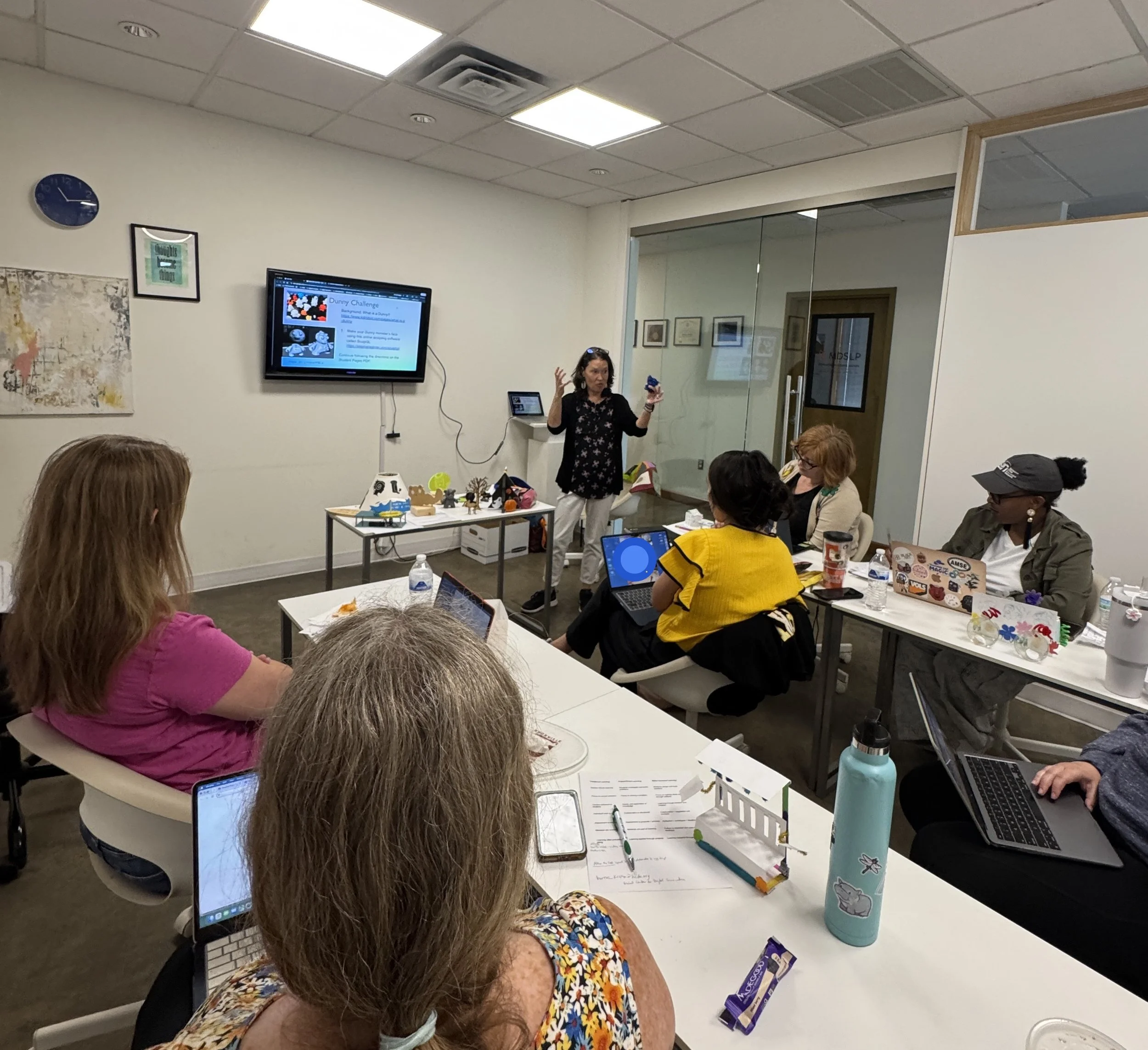
Kristin Burrus, Lead Teacher at the Chattanooga Global Center for Digital Innovation shares with Cohort 1 of the Innovative Makers Academy.
Our time also provided participants opportunities to explore woodturning and experiment with tools and technologies including micro:bits, Makey Makeys, AI platforms, and an xTool laser engraver.
I watched educators who had just met begin to think out loud together in new ways. Ideas moved across the room in real time. No one was performing expertise. They were engaged in authentic conversations.
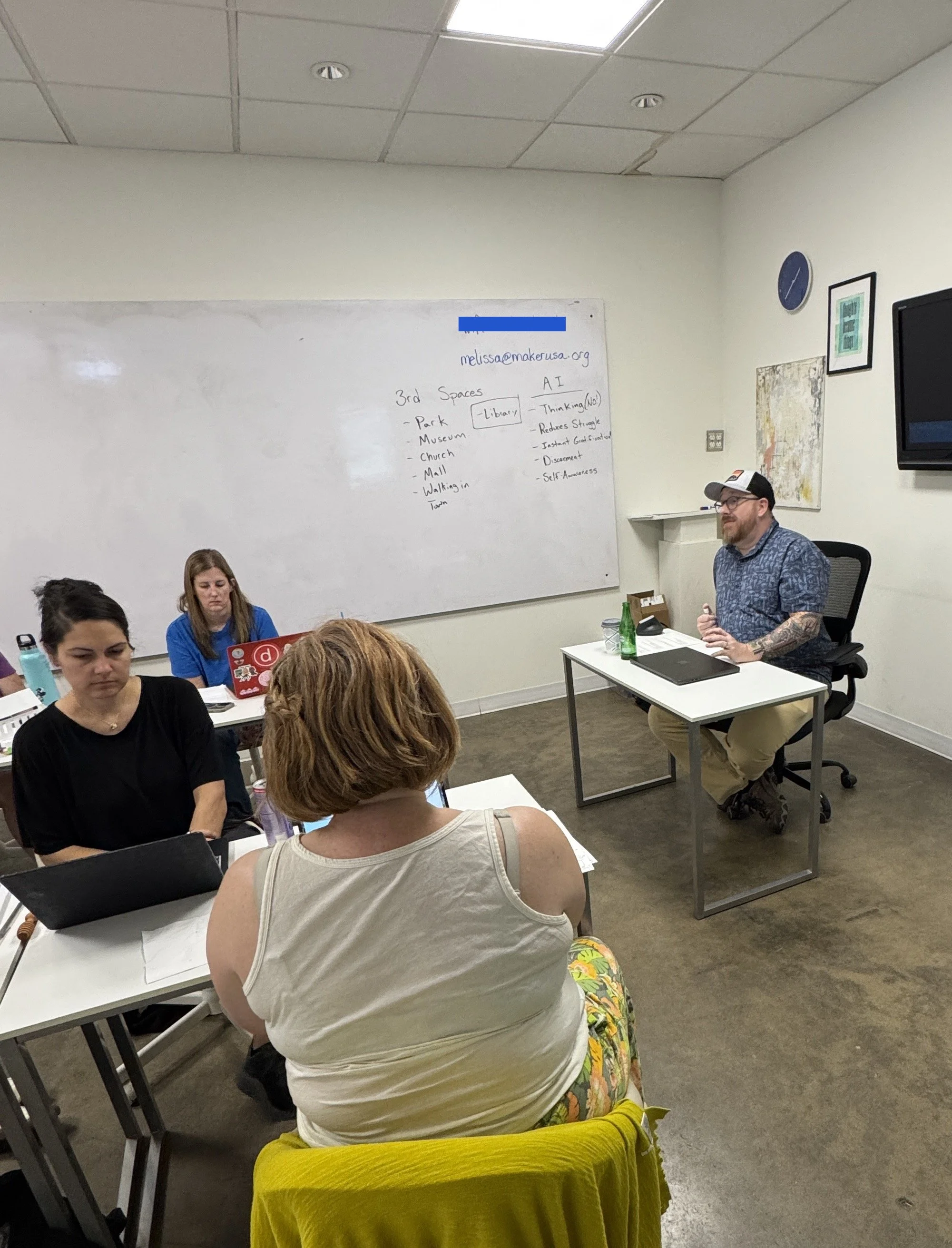
Joel Smith, founder of TeachCraft, discusses how AI can be used as a tool for Project Based Learning creation.
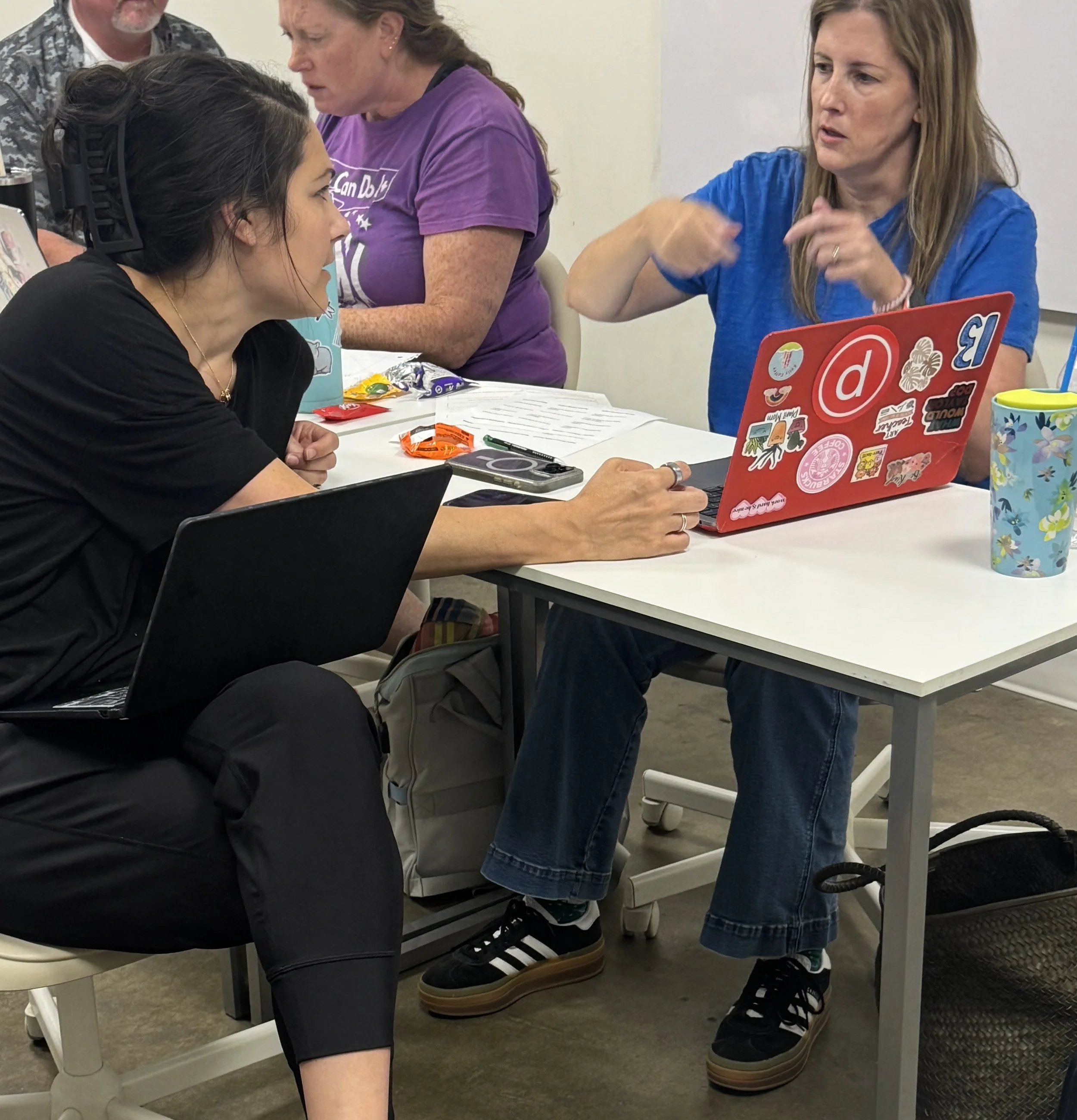
Intentional time was built into the workshop for educators to explore and process new ideas, work through challenges, and discover opportunities to collaborate.
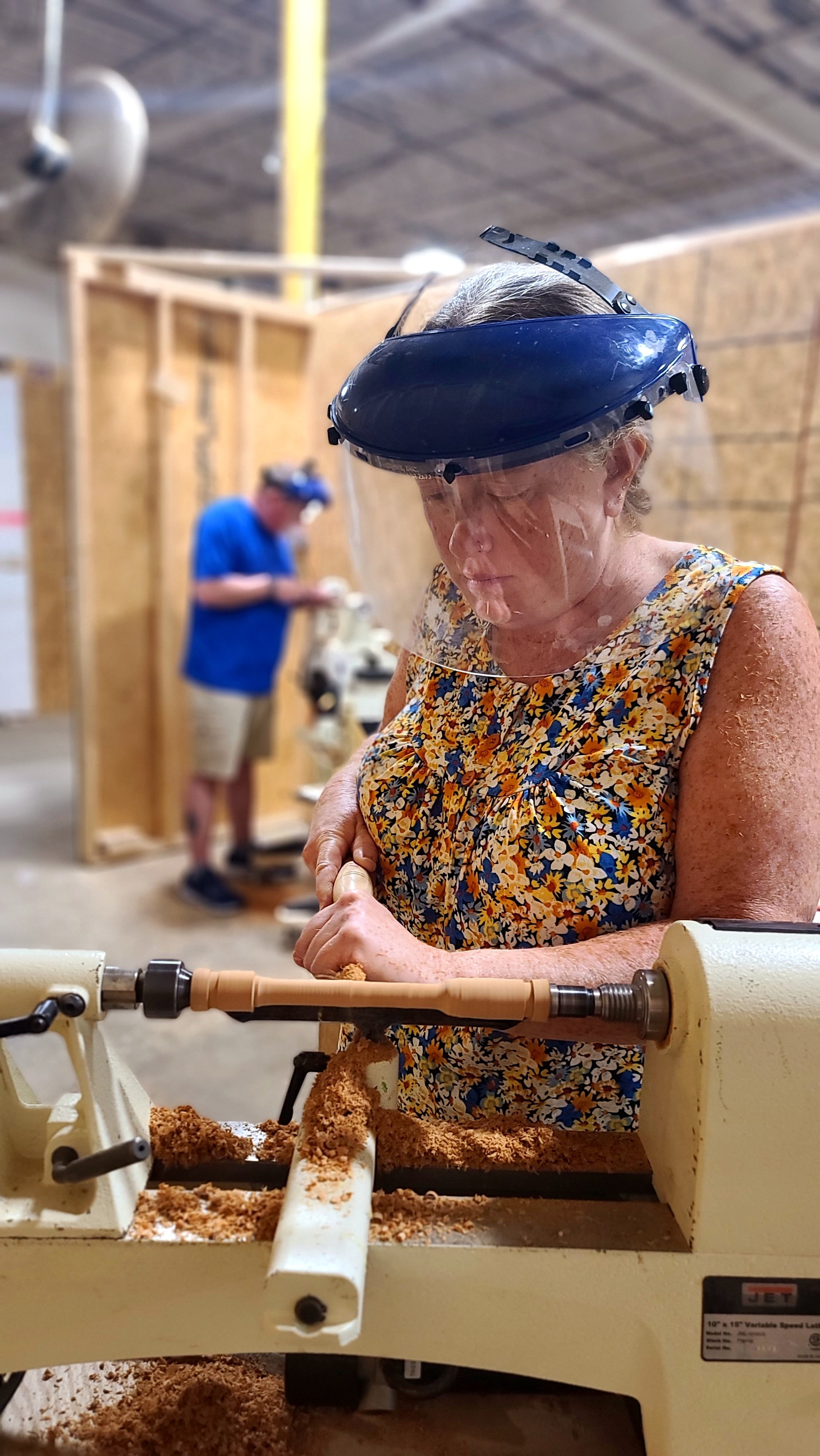
Educators tried their hand at wood turning—a workshop highlight made possible by Heather at Able Trade.
It was exciting to see the planning and goals I had intentionally set out to provide—fun, engaging, interactive—come to life. And “worthwhile”? I think so. Especially when the ultimate feedback shows up as people getting ready to leave and saying they wish the workshop had been longer.
Just another day in the life of a Program Manager.
But I’m starting to wonder if the job description is closer to something like:
Facilitator of unlearning and permission structures.
Which might sound like something I completely made up in true maker fashion… but it also feels increasingly accurate.
And maybe that’s the point—not to hold tightly to titles or certainty, but to stay open to what becomes possible when people are given permission to make, learn—and unlearn—along the way.
